


What Are the Benefits of Singing Bowls? What the Research Actually Shows
Posted by Jeff Howard on 9th Jun 2026
Search "benefits of singing bowls" and you'll drown in promises. Bowls that realign your chakras, detox your cells, rewrite your DNA frequency. Most of it is noise dressed up as science.
So let's do something different here. Let's separate what researchers have actually measured from what gets repeated until it sounds true. The honest version is more interesting anyway, and it still leaves you with plenty of good reasons to keep a bowl within arm's reach.
A singing bowl does three things at once.
- It produces a sustained tone.
- It produces a physical vibration you can feel as much as hear.
- It gives your attention something simple to rest on.
Almost every documented benefit traces back to one of those three, not to anything mystical. That's worth sitting with, because it means the effects are real without needing the magic.
The stress response is where the evidence is strongest
Of those three effects, the one researchers have probed most carefully is what the sound does to your stress response. Two studies are worth knowing here, and it helps to meet them in order of how much weight they actually carry, the rigorous one first and the softer one after.
Start with the 2023 randomized controlled trial led by Rio-Alamos and colleagues, published in the European Journal of Investigation in Health, Psychology and Education. This is the one with teeth. The team played a single session of Himalayan singing bowl sounds comparing a progressive muscle relaxation against a do-nothing control group, both groups using adults who reported high anxiety. The bowl group showed a measurable shift in heart rate variability, the kind associated with the parasympathetic nervous system taking over. In plain terms, their bodies moved toward "rest and digest" more than the people who just sat quietly.
Heart rate variability (HRV) is hard to fake. You can tell a surveyor "I feel calmer"; your autonomic nervous system doesn't lie as easily. A randomized design with a control group also strips out a lot of wishful thinking, which is why this result earns top billing.
The softer evidence comes from an earlier observational study at UC San Diego, led by Goldsby and colleagues in 2017. Sixty-two people went through a sound meditation built around bowls, gongs, and bells, and afterward reported significantly less tension, anger, fatigue, and depressed mood. There was no control group this time, so it leans more anecdotal. Even so, one result is too useful to skip: the drop in tension was largest among people who had never tried this kind of meditation before. If you're a complete beginner, that's the finding speaking directly to you.
Neither study is the final word. But the controlled trial and the larger observational one point the same way, which is that the calming effect isn't only in your head. It's in your head and in your nervous system both. One detail worth holding onto: both studies used metal Himalayan bowls, the heavier hand-hammered kind with the layered overtones. If you want the sound the research actually tested, start with our Himalayan singing bowls: Himalayan Singing Bowls collection page
Why the vibration matters as much as the sound
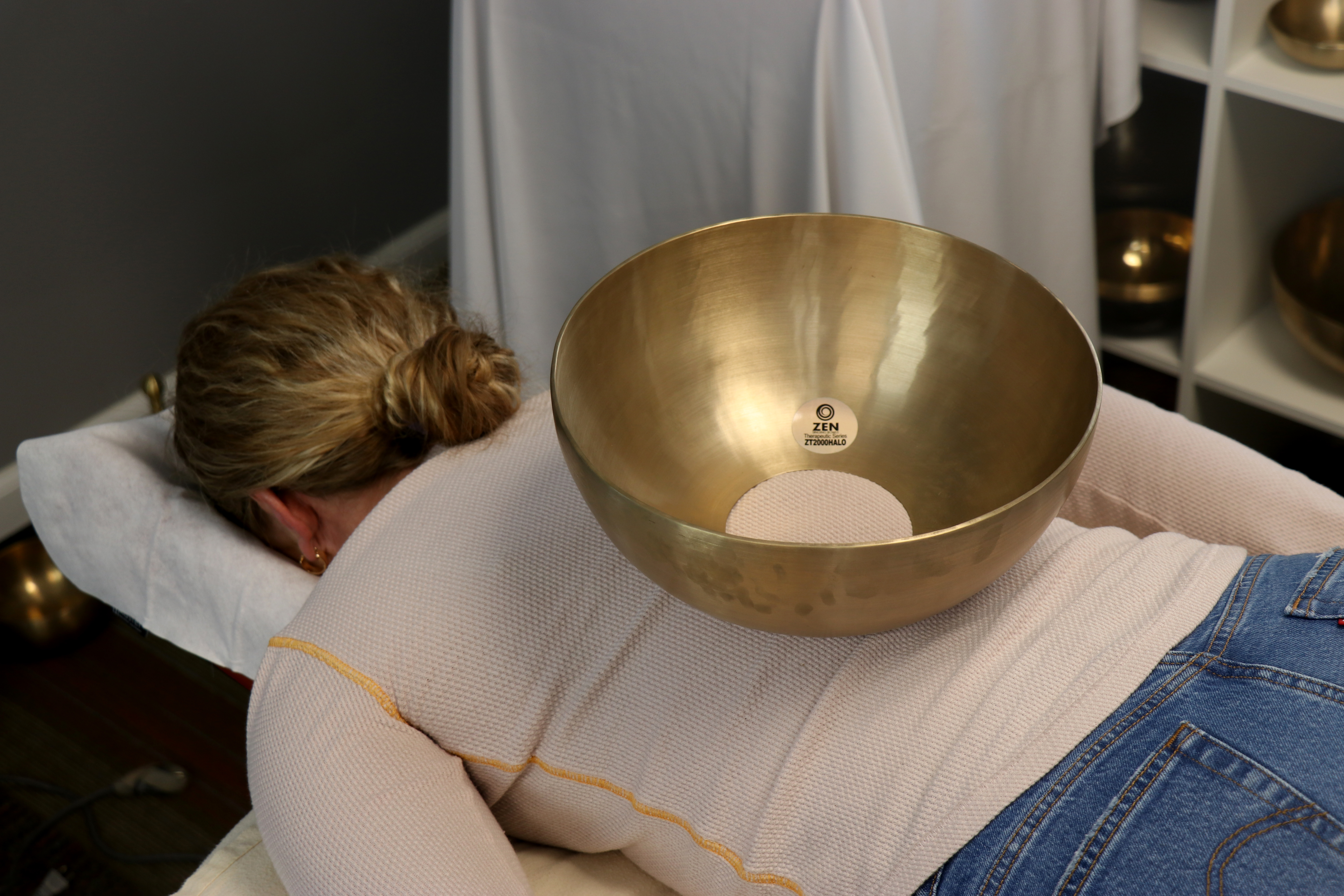
Here's something people miss. A good bowl doesn't just make a sound that travels to your ears. It moves air. If you rest the bowl on your body or sit close, it moves you a little too. That low, lingering hum is closer to a physical sensation than a tune.
This is part of why a bowl can pull a wandering mind back faster than silence does. Silence leaves room for the to-do list to creep in. A long, slowly fading tone gives your attention an anchor, something to follow as it decays. Meditation teachers have leaned on this for a long time, and it lines up with what the mood research found: the people new to the practice got the most relief, probably because the sound did some of the focusing work their minds couldn't do alone yet.
If your goal is meditation you'll actually stick with, that anchoring quality is the benefit that matters most day to day. It lowers the barrier to entry. You don't have to be good at sitting still. You just have to follow the sound until it disappears, then play it again. This is where crystal singing bowls tend to win people over, since they hold a single clear note far longer than metal does, giving a restless mind more to follow before the next strike.
Sleep, wind-down, and the ritual effect
There isn't a clean clinical trial proving singing bowls put you to sleep and I won't pretend there is. What there is, though, is a sensible chain of reasoning supported by the stress findings above.
Most people don't have trouble sleeping because they're physically incapable of it. They have trouble because they can't downshift. The nervous system is still running the day's tape. A short bowl practice before bed does two useful things: it nudges you toward that parasympathetic state the HRV study captured, and it builds a ritual your brain learns to read as "we are done now." Ritual is underrated. The repeated cue often does as much work as the sound itself.
So the honest claim is this. A bowl won't sedate you, but it can help you stop bracing, and for a lot of people that's the actual obstacle.
The part where I tell you what we don't know
The findings above only carry weight if you also know where the research runs thin. So here's the careful version.
In 2020, two researchers (Stanhope and Weinstein) pulled together every study they could find on the health effects of singing bowls and reviewed them as a body. Their conclusion was measured: the results lean positive, but the studies are few, the sample sizes are small, and the methods often leave room for bias. They called for more rigorous work before anyone makes firm medical claims. That review is the most intellectually honest document in this whole field, and it should temper how any of us talk about bowls.
Two more things worth being straight about.
First, nearly all of the peer-reviewed research used metal Himalayan-style bowls, not crystal ones. Crystal bowls are wonderful instruments, easier for beginners to play and prized for that pure sustained tone, but the studies measuring nervous-system effects mostly weren't done on them. If someone tells you crystal bowls are clinically proven to do anything specific, they're extrapolating. The reasonable position is that the relaxation and attention benefits likely carry across because the mechanism (sound, vibration, focus) is shared, while the specific clinical data sits with metal bowls. We get into the practical differences in our guide to crystal versus Himalayan singing bowls if you want to weigh the two side by side: Crystal Singing Bowls vs Himalayan Singing Bowls: Which One Is Right for You?
Second, none of this treats illness. A bowl is not a substitute for therapy, medication, or a doctor. It's a tool for stress, focus, and winding down, and it's a good one within those lanes. Keep it there and it rarely disappoints.
So who actually benefits, and from which bowl
Strip away the hype and the picture is pretty clear about who gets the most out of a bowl.
People carrying chronic low-grade stress tend to feel the relaxation effect quickly, because they have the most tension to discharge. Beginners to meditation benefit more than seasoned practitioners, going by the observational study, since the sound does the focusing they haven't built yet. If that's you, our guide to the best singing bowl for beginners is the easier place to start than this one. And anyone trying to establish an evening wind-down ritual has a natural use for a bowl too.
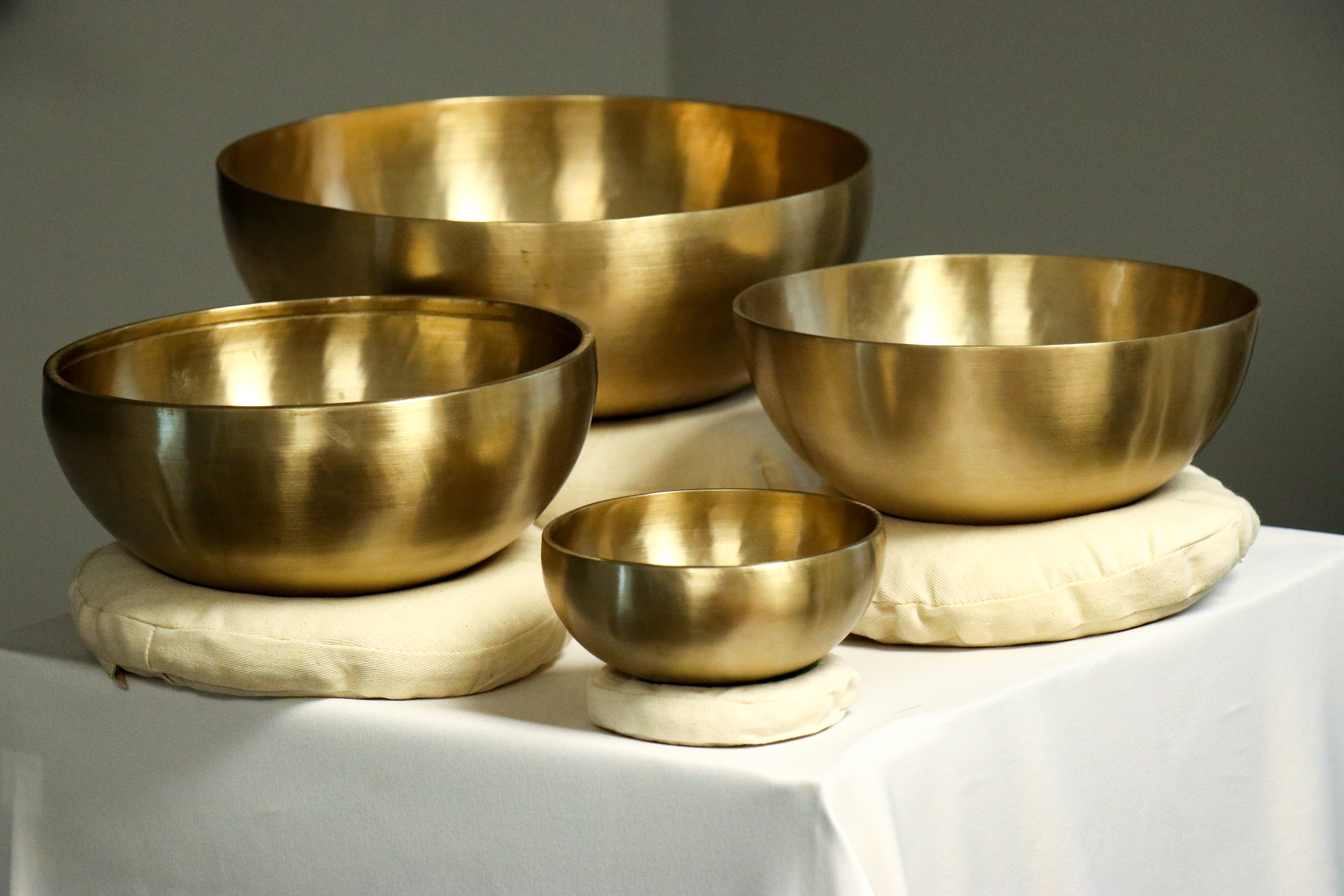
Matching the bowl to the person matters more than chasing a "best" bowl. A beginner who wants the easiest possible tone to follow usually loves a crystal bowl. Someone drawn to the deep, complex hum used in traditional practice and in the studies will want a metal Himalayan bowl. A collector or practitioner often ends up with both, plus an antique bowl for the character of an older alloy. If you're still deciding, our complete guide to the types of singing bowls walks through every option by sound, size, and use.
The benefits you came looking for, in the end, are simpler than the internet make it sound. They help your body shift out of high alert, and it hands a restless mind one quiet thing to follow. The research backs that up without any need for the cosmic claims. Buy the one whose sound you don't want to stop listening to, and the rest tends to follow.
Resources and citations
Goldsby, T. L., Goldsby, M. E., McWalters, M., & Mills, P. J. (2017). Effects of Singing Bowl Sound Meditation on Mood, Tension, and Well-being: An Observational Study. Journal of Evidence-Based Complementary & Alternative Medicine, 22(3), 401-406. https://pubmed.ncbi.nlm.nih.gov/27694559/
Rio-Alamos, C., Montefusco-Siegmund, R., Cañete, T., Sotomayor, J., & Fernandez-Teruel, A. (2023). Acute Relaxation Response Induced by Tibetan Singing Bowl Sounds: A Randomized Controlled Trial. European Journal of Investigation in Health, Psychology and Education, 13(2), 317-330. https://www.mdpi.com/2254-9625/13/2/24 (open access) PubMed record: https://pubmed.ncbi.nlm.nih.gov/36826208/
Stanhope, J., & Weinstein, P. (2020). The human health effects of singing bowls: A systematic review. Complementary Therapies in Medicine, 51, 102412. https://www.sciencedirect.com/science/article/abs/pii/S096522991931756X