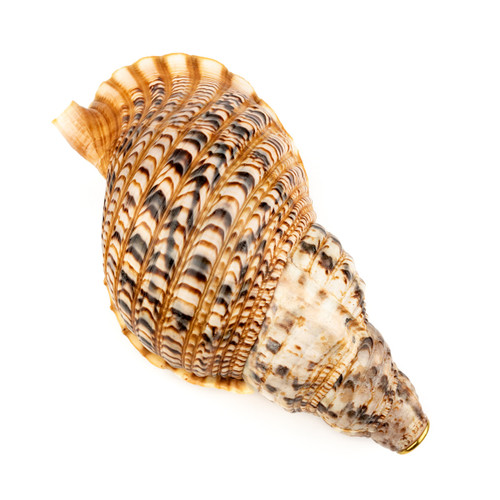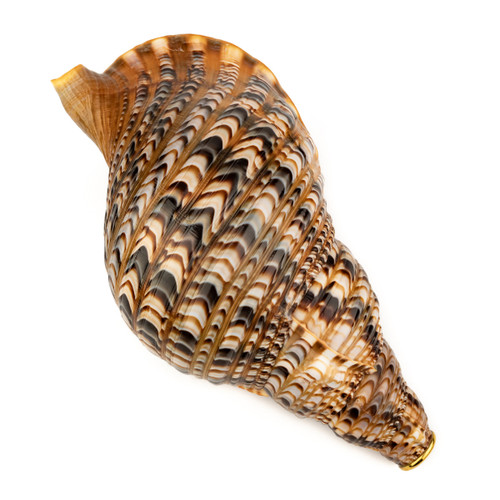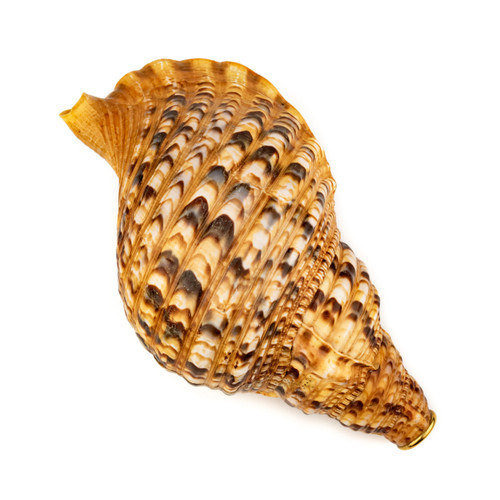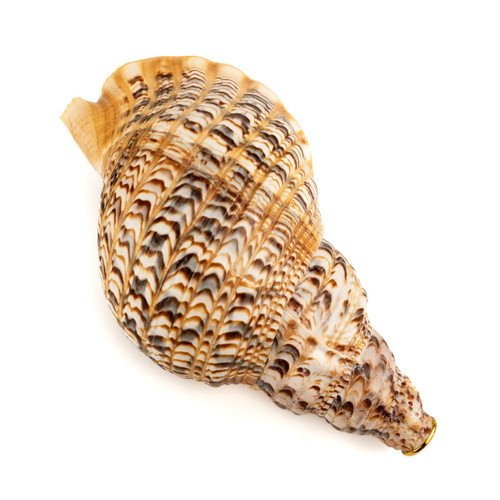


7.5" Thetazen Pink Queen Conch Shell Horn G Note #tz7.5cspq01
Length: 7.5 inches
Weight: 715 grams
Note: G Note
The photo and sound sample are of the exact shell you will receive. No two are alike in shape, marking, or voice.
A Thetazen Pink Queen Conch Shell Horn, cut and finished from a natural queen conch and ready to play. This is a different animal from our triton horns in every sense — broader and heavier in the hand, with the deep glossy pink aperture the species is famous for. The shape changes the sound as much as the look. Where a triton's long, narrow spiral produces a low and rounded voice, the queen conch's shorter, faster-flaring bore gives a brighter and more penetrating note. It's the sound most people picture when they imagine a conch horn, and it carries outdoors better than almost anything else you can hold in two hands.
How to Play It
A conch is closer to a trumpet than a flute. Rest your lips against the cut opening and buzz them together — loose and relaxed for the deep fundamental, tighter for the notes above it. Most people find their first note within a few minutes. Once you're comfortable, the harmonic series will give you two or three usable pitches.
Conch horns are used to open and close sound baths, to call a group together, to mark transitions in ceremony and meditation, and increasingly in ambient recording and film scoring. A queen conch's carrying power also makes it the better choice for outdoor work, where a softer horn gets lost.
Care: wipe the mouthpiece after playing and keep the shell out of prolonged direct sunlight. The pink interior is the first thing to fade.
The Oldest Instrument Still in Use
In 1931, archaeologists recovered a large conch from a cave at Marsoulas in the French Pyrenees and catalogued it as a ceremonial drinking cup. Ninety years later a research team looked again and found the tip deliberately removed and the interior worked to take a mouthpiece. So they brought in a horn player. It produced three clear notes. That shell is roughly 18,000 years old, the oldest conch instrument ever found, and among the oldest wind instruments of any kind.
Shell horns then appear, independently, almost everywhere people met the sea. India's shankha is named in the Atharvaveda around 1000 BCE and is still blown in temples daily. Tibet's dungkar calls practitioners to teachings. Japan's horagai was carried by yamabushi mountain ascetics from the Heian period onward and later used to signal troops across valleys. In Hawaii the pū opens ceremonies and announces arrivals, and the Māori pūtātara welcomes guests onto the marae. For an instrument nobody invented on purpose, it found remarkably consistent work: calling people together, and marking the moment something begins.
The Voice of the Caribbean
The queen conch has a history all its own. Where the triton belongs to the Indo-Pacific and its temples, this is the shell of the Atlantic and the Caribbean. The Taíno of the Greater Antilles called their shell trumpet the guamo, or fotuto, and sounded it to gather people and open ceremonies — the word survives in Caribbean Spanish to this day. Ancient Maya artists carved and painted conch trumpeters into scenes of ritual and war, playing this same species.
And it never became history. In Caribbean fishing villages a conch blast still announces that a boat is in and there's fresh catch for sale. In Key West the shell sank so deep into local identity that natives are called Conchs, the high school mascot is a conch, and the town has held an annual conch shell blowing contest since around 1970, judged on tone and duration, costumes encouraged. Few instruments this old are still doing ordinary daily work. This one is.