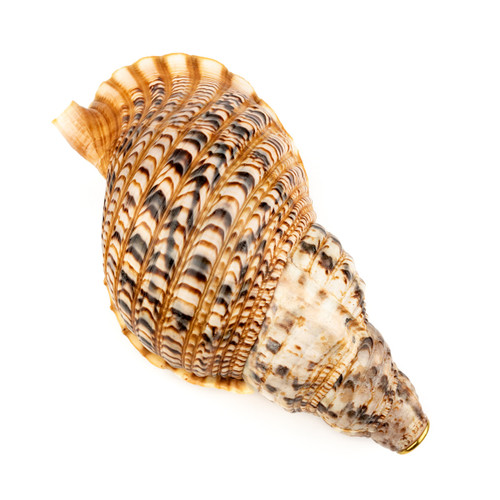


11" Thetazen Triton Conch Shell Horn #tz11cs
Length: ~ 11 inches
Weight: ~ 480 grams
A Thetazen Triton Conch Shell Horn, cut and finished from a natural triton shell and ready to play. Eleven inches is the largest size we sell in bulk, and it has most of the depth of the other bulk shells. The long spiral gives a low, broad fundamental with real presence behind it, and the extra mass means the horn sits steady in the hands while you play. If you want the big-shell voice without waiting for a specific shell to come back in stock, this is it.
The photo and sound sample show a representative horn of this size rather than the exact shell you will receive. Every shell is natural and individual, so shape, marking, and note will vary somewhat from the example shown.
How to Play It
A conch is closer to a trumpet than a flute. Rest your lips against the cut opening and buzz them together — loose and relaxed for the deep fundamental, tighter for the notes above it. Most people find their first note within a few minutes. Once you're comfortable, the harmonic series will give you two or three usable pitches.
Conch horns are used to open and close sound baths, to call a group together, to mark transitions in ceremony and meditation, and increasingly in ambient recording and film scoring.
Care: wipe the mouthpiece after playing and keep the shell out of prolonged direct sunlight, which fades the natural banding over time.
The Oldest Instrument Still in Use
In 1931, archaeologists recovered a large conch from a cave at Marsoulas in the French Pyrenees and catalogued it as a ceremonial drinking cup. Ninety years later a research team looked again and found the tip deliberately removed and the interior worked to take a mouthpiece. So they brought in a horn player. It produced three clear notes. That shell is roughly 18,000 years old, the oldest conch instrument ever found, and among the oldest wind instruments of any kind.
Shell horns then appear, independently, almost everywhere people met the sea. India's shankha is named in the Atharvaveda around 1000 BCE and is still blown in temples daily. Tibet's dungkar calls practitioners to teachings. Japan's horagai, made from this same triton species, was carried by yamabushi mountain ascetics from the Heian period onward and later used to signal troops across valleys. In Hawaii the pū opens ceremonies and announces arrivals, and the Māori pūtātara welcomes guests onto the marae. For an instrument nobody invented on purpose, it found remarkably consistent work: calling people together, and marking the moment something begins.
Named for a God of the Sea
The species carries the oldest story of all. In Greek mythology, Triton, son of Poseidon, raised and calmed the waves by sounding a twisted shell horn. In Ovid's account of the great flood, it is Triton's conch that orders the waters to retreat. The shell was named after the god. Sounding one is about as direct a line to the ancient world as an instrument can offer.