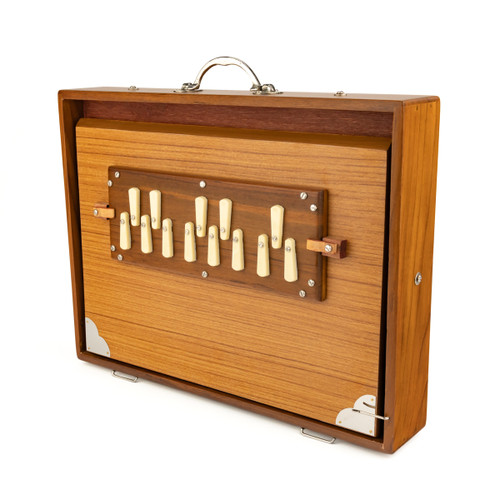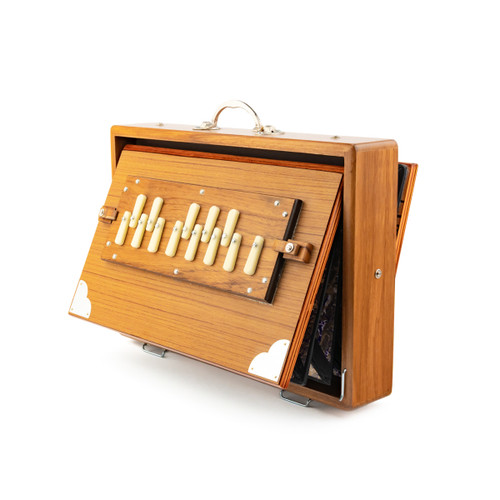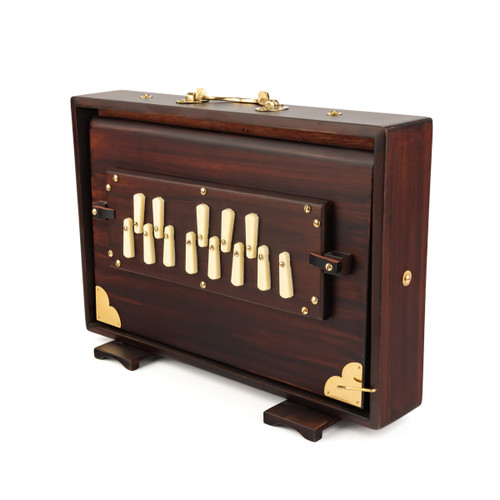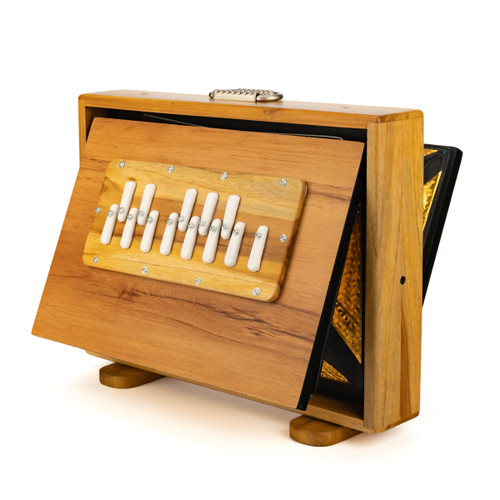


Large 440Hz 36-Note Three Octave G2-F#5 Shruti Box with Carry Case 85001086
Size: 16" x 12" x 2.5"
Average weight: 3980g
Scale: Second, Third, and Fourth Octave 36-Note G2-F#5
Includes: Carrying Case
All sales on discounted and blemished products are final; no returns or exchanges accepted.
This is the largest size in the shruti box lineup, tuned to 440Hz with a 36-note three-octave range from G2 to F#5 (covering the full chromatic scale across three octaves). The extended range delivers the broadest tonal palette available in a shruti box, giving the player room to build deep grounding drones in the lower octave, supportive mid-range chord beds, and bright carrying tones in the upper octave, all from a single instrument. This makes the three-octave box the natural choice for serious practitioners, professional sound therapists, working musicians, and recording artists who need a single drone instrument capable of supporting any vocal range, any key, and any layered harmonic arrangement. It excels in studio work where the drone needs to sit in specific frequency pockets, in ensemble settings where multiple vocalists or instruments require different anchor tones, in advanced sound therapy sessions where the practitioner shifts between octaves to work different energy centers, and in any kirtan or devotional setting where the music moves freely through changing keys. The larger body also delivers exceptional resonance and bellows capacity, with strong projection that carries through large rooms, group sessions, and live performance settings without losing presence.
The shruti box has its roots in the classical music traditions of India, where it evolved as a portable hand-pumped reed instrument designed to hold a steady drone behind vocalists and other musicians. Its name comes from the Sanskrit word shruti, meaning "that which is heard," a term that in Indian musical theory refers to the smallest perceptible interval of pitch and to the foundational tones around which raga melodies are built. Historically, the shruti box replaced the older tanpura in many traveling settings, since it offered the same continuous drone in a far more compact and durable form. Today the instrument is used well beyond its classical origins, finding a place in sound therapy, meditation, kirtan and devotional singing, yoga and chanting practice, songwriting, and any setting where a sustained, breathing drone is needed to anchor voice or melody.
A shruti box is played by opening the bellows on one side of the box and gently pumping air through internal reeds, with the player selecting which notes to sound by opening or closing small stoppers on the front of the instrument. Any combination of notes can be held open at once, allowing the player to build single-note drones, fifths, octaves, or fuller chord-like tonal beds depending on the practice. The bellows breathe slowly and steadily, which gives the shruti box its distinctive living, rising-and-falling quality, closer to a sung note than to a synthesized drone. To play, sit with the box on the lap or a low surface, open the desired reed stoppers, and rock the bellows gently in a slow rhythm; the sound will sustain as long as the player keeps the air moving. The instrument requires no tuning, no electricity, and no musical training to use, which is why it has become a favorite for sound practitioners, yoga teachers, and singers looking for an unplugged drone they can carry anywhere.
Please note that this shruti box is handcrafted from solid wood by skilled artisans, and small variations from instrument to instrument are a natural part of that process. Differences in wood grain, color, finish tone, and small variations in the hardware placement are normal and expected, and may differ slightly from the photos shown. Each box is tested and tuned before shipping, but because reeds are hand-set, very subtle character differences in tone and bellows response are part of what makes each instrument unique rather than identical to the next. These small variations are not flaws but the signature of a handmade instrument made the traditional way.